The island
The island, month by month
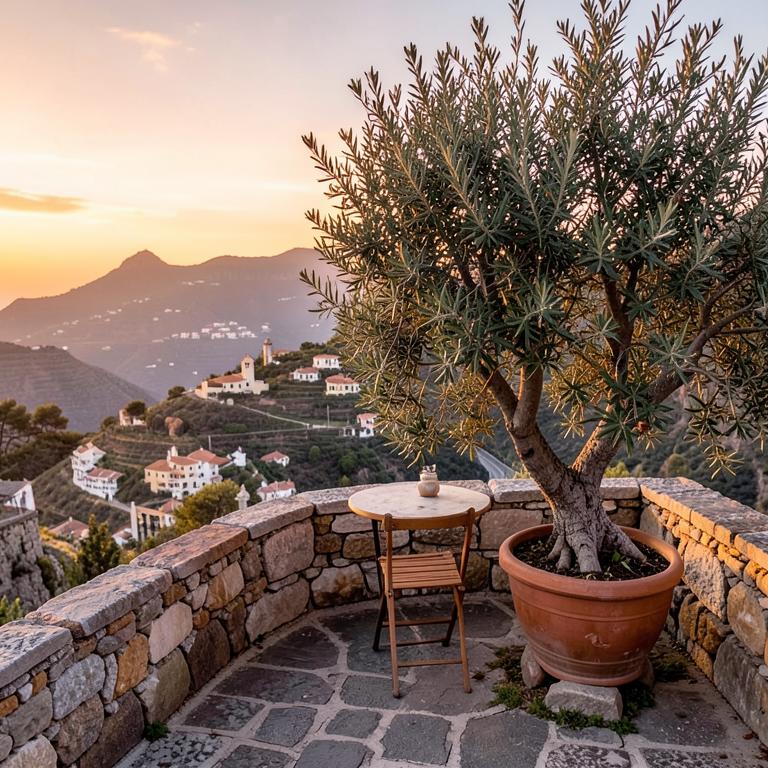
Mallorca is the quiet half of the Mediterranean's most watched coastline. Between September and June the island belongs to the people who live here: the markets stay local, the mountain roads empty out, and lunch by the water is a table you can simply walk up to.
It is also, discreetly, one of Europe's most selective destinations. Palma's Real Club Náutico hosts the Copa del Rey, the regatta the Spanish King himself sails in; Port Adriano and Puerto Portals moor yachts that winter here; and the Serra de Tramuntana, a UNESCO World Heritage landscape, runs the whole north-west coast in dry-stone terraces and olive groves.
Tourism here is filtered rather than mass: Michelin kitchens in Palma and Deià, restored fincas rather than resorts, direct flights to every major European city, international schools, private clinics and reliable connectivity. Out of season you get all of that infrastructure with none of the queues — which is exactly what a monthly stay is for.
Where we have homes
- Palma de Mallorca
- The island's capital and its only true city: a Gothic cathedral above the bay, Santa Catalina and La Lonja for dinner, Es Baluard for art, and the Real Club Náutico marina where the Copa del Rey is sailed each summer. Apartments here range from old-town palaces with patios to bright flats in Portixol and Molinar, minutes from the sea and the airport.
- Calvià
- The south-west coast: Portals, Bendinat, Son Vida and Santa Ponsa, with the deep-water marinas of Puerto Portals and Port Adriano. Golf, international schools and a short drive into Palma make it the most practical base for a longer winter stay.
- Andratx
- Port d'Andratx sits in a sheltered natural harbour at the western tip of the island, with Sant Elm and the Dragonera nature reserve beyond. Quiet, expensive, and famously beautiful at dusk — a favourite for people who want the sea without the crowds.
- Pollença
- A Renaissance town in the north with the 365-step Calvari staircase, a Sunday market under plane trees, and Port de Pollença ten minutes away on a long, flat bay. Good for cycling, sailing and slow mornings.
- Alcúdia
- Medieval walls, a Roman theatre, and one of the island's largest bays with shallow water and pine woods behind it. The old town keeps its bakeries and Tuesday market running all winter.
- Sóller
- An orange-growing valley ringed by the Tramuntana, joined to its port by a wooden tram and to Palma by the 1912 vintage train. Grand town houses, mountain walks from the doorstep, and a working town rather than a resort.
- Deià
- Terraced stone houses stacked on a Tramuntana hillside above Cala Deià, long a village of writers, painters and musicians. Small, quiet and dramatic, with Palma forty minutes away over the mountain road.
- Bunyola
- A foothill village at the mouth of the Tramuntana, with Alfàbia's gardens nearby and Palma fifteen minutes down the valley. Green, unhurried, and cooler than the coast.
- Santanyí
- Golden sandstone streets in the south-east, a large Wednesday and Saturday market, galleries and cafés, and some of the island's clearest coves — Cala Llombards, Mondragó and Es Trenc within reach.
- Llucmajor
- A broad inland municipality reaching the sea at Sa Ràpita and Es Trenc, with country fincas, riding, golf and long uninterrupted beaches on the south coast.
- Campos
- Farmland, windmills and stone fincas inland from the south coast, close to Colònia de Sant Jordi and the salt flats. Ideal for anyone who wants space, silence and a car.
- Felanitx
- Wine country under the Sant Salvador monastery, with Portocolom's fishing harbour and the calm water of Cala Marçal on the coast below. Genuine local life, low prices, good produce.
- Manacor
- The island's second town, known for pearls and furniture workshops, with Porto Cristo, the Drach caves and a string of east-coast coves at its edge. Practical services and a real working centre.
- Son Servera
- The north-east coast around Cala Bona and Cala Millor, with the Costa dels Pins pinewoods and a golf course above the sea. Long promenades and quiet winters.
- Sant Llorenç des Cardassar
- Inland almond country running down to Sa Coma and S'Illot, with the Punta de n'Amer nature reserve between the beaches. Village rhythm, close to the sea.
- Artà
- A hill town crowned by the Sant Salvador sanctuary, on the edge of the Llevant natural park and above the wild bays of Cala Torta and Canyamel. The most unspoiled corner of the island.
- Santa Margalida
- Farming villages behind the long beach at Can Picafort, close to the S'Albufera wetland and its birdlife. Flat cycling country and wide skies.
- Muro
- A quiet inland town with Playa de Muro's dune-backed beach nearby, one of the calmest stretches of sand in the Bay of Alcúdia.
- Sa Pobla
- Market gardens and a strong local food culture on the edge of S'Albufera, fifteen minutes from the northern beaches.